Manufacturing at the Tactical Edge: The Future of Military Drone Operations
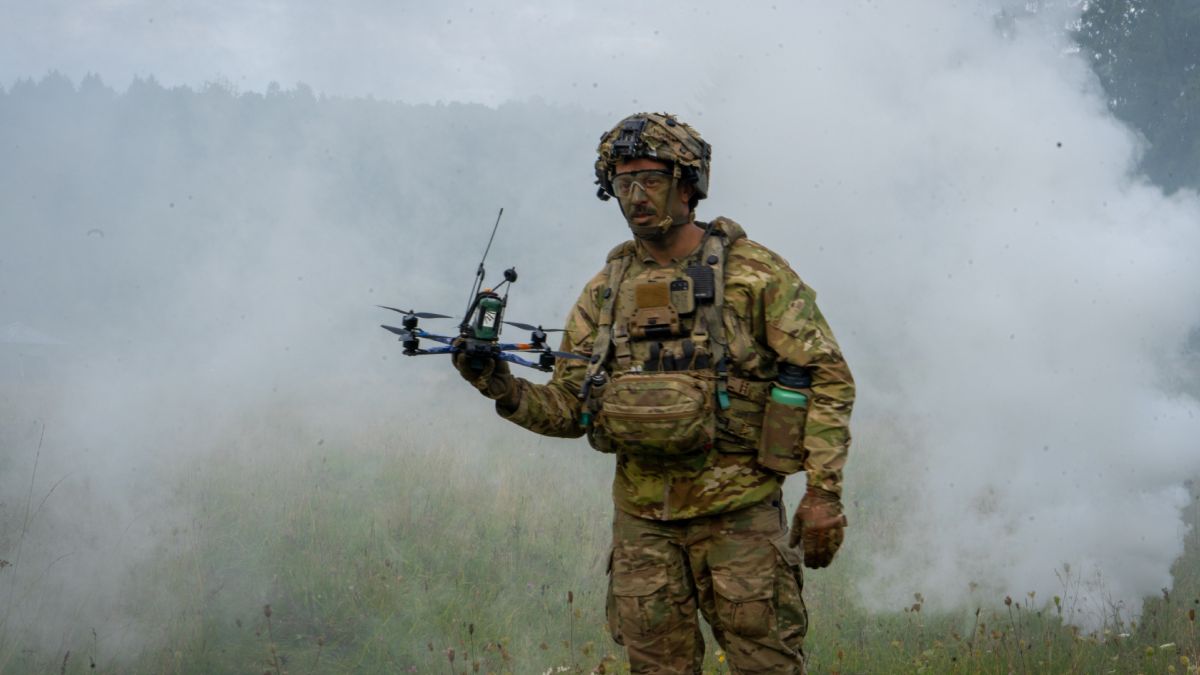
With the passage of the FY2026 National Defense Authorization Act, the United States has made one thing very clear—advanced manufacturing is no longer just an industrial capability; it is a strategic defense priority. The legislation pushes for stronger domestic production, encourages dual-use manufacturing innovation, and places tighter controls on foreign-influenced hardware in critical systems like computing and additive manufacturing.
In simple terms, the Department of Defense is moving toward a future where manufacturing is not confined to factories. Instead, it is mobile, secure, and deployable directly in operational environments—especially for unmanned aerial systems (UAS).
The Shift Toward Field-Ready Drone Manufacturing
Modern warfare is evolving at a pace where adaptability matters more than scale. Drones are no longer limited to surveillance roles; they now support logistics, reconnaissance, precision targeting, and even coordinated swarm missions. This growing reliance has exposed a major limitation—traditional manufacturing simply cannot keep up.
Centralized production models depend on long supply chains and fixed timelines. In high-risk or remote environments, waiting weeks for replacement parts or upgrades can compromise entire missions. The need of the hour is clear: manufacturing must move closer to where operations actually happen.
This is where the idea of “tactical edge manufacturing” comes in—producing, repairing, and modifying drone components directly in the field.
Why Centralized Manufacturing Is No Longer Enough
The traditional approach to drone production was built for stability, not speed. It assumes predictable demand, safe logistics routes, and time for scheduled maintenance. None of these assumptions hold true in modern conflict zones.
When drones are damaged mid-mission or require quick modifications based on real-time intelligence, delays become costly. Operational efficiency now depends on how quickly systems can be adapted or restored—not just how well they were originally built.
Decentralizing manufacturing reduces dependency on vulnerable supply chains and gives defense teams the flexibility to respond instantly.
Advanced Materials Powering Next-Gen Drones
Material innovation is playing a key role in transforming drone capabilities. Earlier designs relied heavily on metals like aluminum, steel, and titanium, along with standard plastics. While effective, these materials often limit performance when it comes to weight, durability, and endurance.
Today, advanced composites—especially carbon fiber-reinforced thermoplastics—are redefining what drones can achieve. These materials provide exceptional strength while remaining lightweight, allowing drones to fly longer and carry more payload without compromising structural integrity.
They also improve resistance to environmental stress such as corrosion, vibration, and fatigue, making them ideal for harsh and unpredictable conditions. In many cases, these composites can match or even outperform traditional metals at a lower overall cost.
Challenges of Deploying 3D Printing in the Field
Despite its advantages, deploying additive manufacturing in real-world conditions comes with challenges. Field systems must be designed to operate in extreme environments—handling heat, cold, dust, and constant movement.
They also need to function with unstable or limited power sources while maintaining high reliability. Security is another major concern, as design files and production data must be protected from cyber threats.
On top of that, these systems must be simple enough for personnel to operate without requiring specialized manufacturing expertise. This has led to the development of rugged, user-friendly, and secure 3D printing platforms specifically built for defense use.
What NDAA 2026 Means for the Future
The FY2026 NDAA reinforces a broader shift already underway in defense manufacturing. It signals a move away from dependence on foreign-controlled infrastructure and toward secure, domestically controlled production ecosystems.
There is also a clear push for increased investment in dual-use technologies—solutions that serve both military and commercial applications—along with a stronger focus on transparency, traceability, and system security.
Most importantly, it accelerates the adoption of additive manufacturing across defense programs, positioning it as a core capability rather than an experimental technology.
The Road Ahead
Manufacturing is no longer just a backend function—it is becoming an operational advantage. As drone warfare continues to evolve, the ability to design, produce, and repair systems at the tactical edge will define how effectively missions are executed.
The future of military drone operations lies in agility, resilience, and self-sufficiency. And at the center of it all is a new manufacturing paradigm—one that brings production directly to the front lines.
Download the Free Report on How COVID-19 has Impacted Supply Chains
Gain key insights including: COVID-19 pandemic impact on business. 3D printing use during the health pandemic. Challenges facing manufacturers using incumbent technology. Future plans for investing in additive manufacturing. And more...
Get the report